
Factory roofs exposed to chemical fumes should use FRP purlins with a resin chosen for the chemicals: polyester for humid air and dilute acids, vinyl ester for stronger chemicals. In plating shops, fertiliser stores and wastewater plants, fumes condense with moisture under the roof into a corrosive film, steel purlins rust far faster than in normal buildings and paint peels within a few years.
What is in the air of each type of plant?
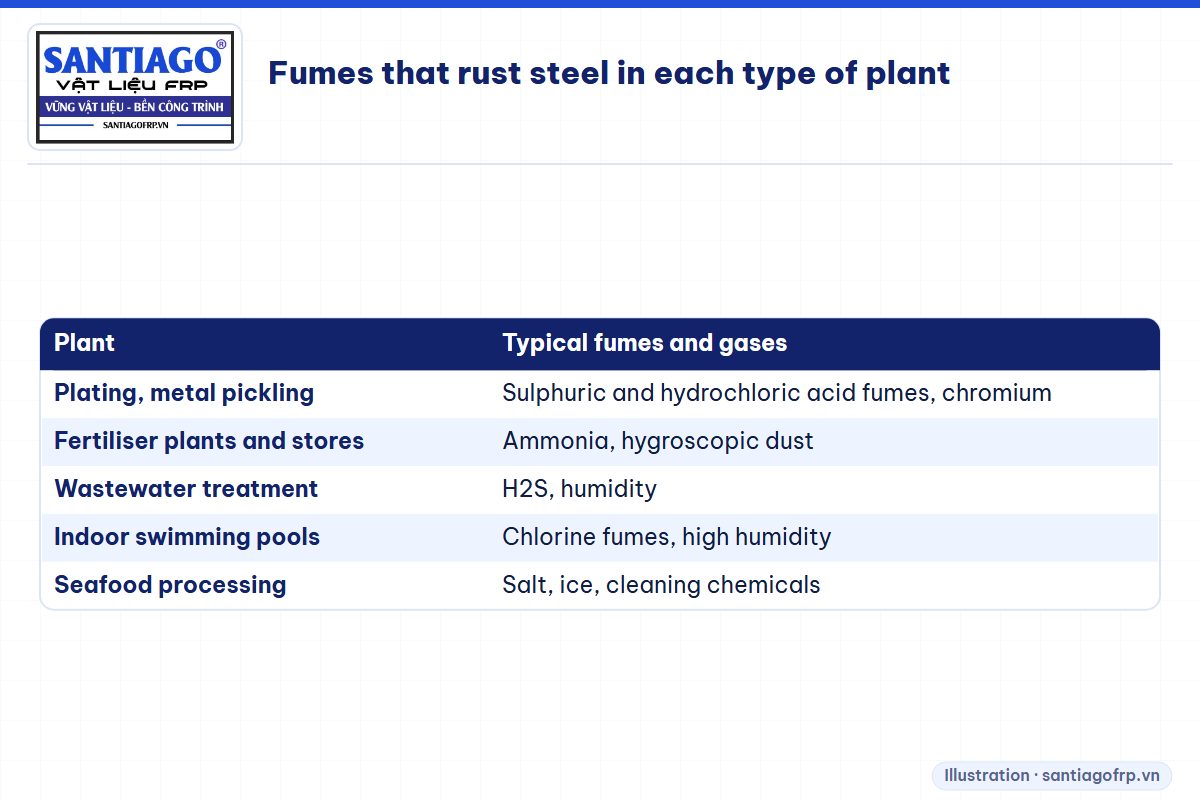
| Plant | Typical fumes and gases | Effect on steel |
|---|---|---|
| Plating, pickling | Sulphuric and hydrochloric acid fumes, chromium | Very fast rust, paint peels |
| Fertiliser plants and stores | Ammonia, hygroscopic dust | Dust sticks to purlins, absorbs moisture, corrodes continuously |
| Wastewater treatment | H2S, humidity | H2S forms acid on wet surfaces, corroding steel and concrete |
| Indoor swimming pools | Chlorine fumes, high humidity | Corrodes steel and even ordinary stainless bolts |
| Seafood processing | Salt, ice, cleaning chemicals | Rusts as fast as on the coast |
Under ISO 9223, chemical plants and indoor pools are usually corrosivity category C4; wet areas with concentrated chemicals can be worse.
Polyester or vinyl ester?
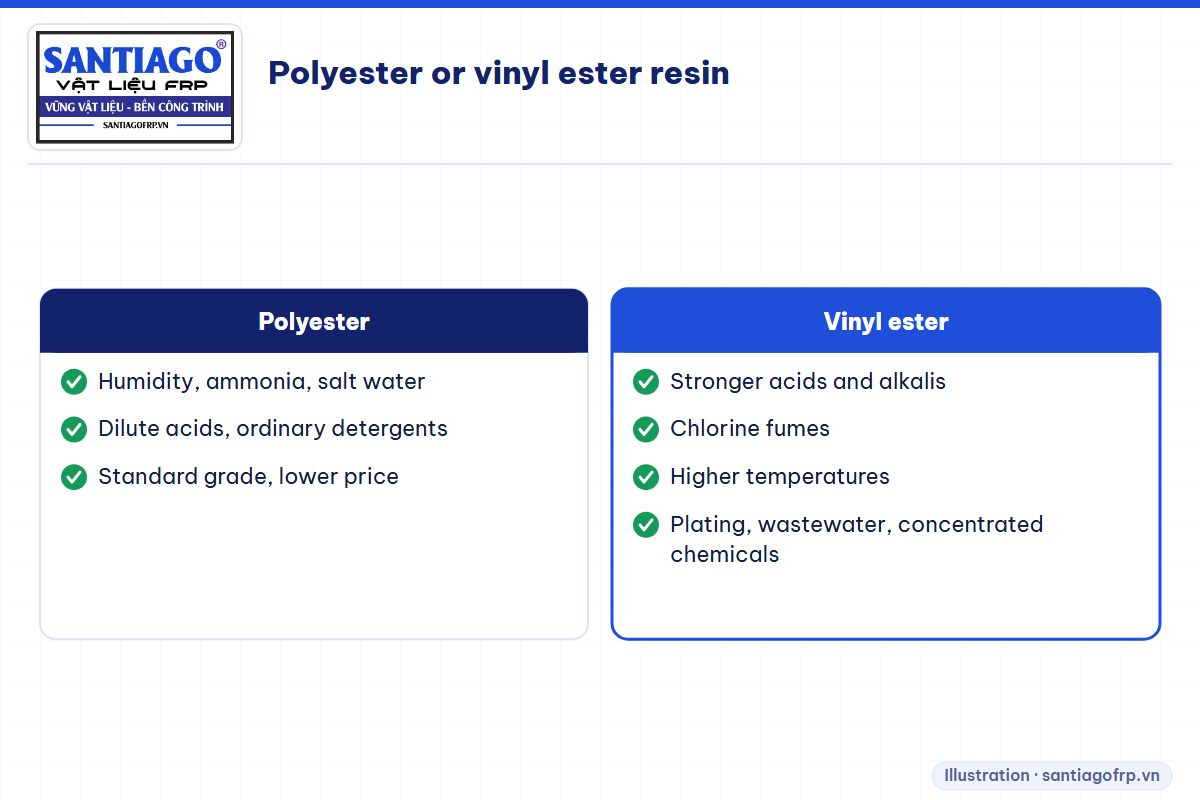
| Resin | Suitable for | Notes |
|---|---|---|
| Polyester | Humidity, ammonia, salt water, dilute acids, ordinary detergents | Standard grade, lower price |
| Vinyl ester | Stronger acids and alkalis, chlorine fumes, higher temperatures | For plating, wastewater, concentrated chemicals |
Some chemicals need special advice even with vinyl ester: hydrofluoric acid (which attacks glass fibre), hot concentrated alkalis and strong organic solvents. These need an extra synthetic-veil surface barrier.
What should I tell Santiago FRP?
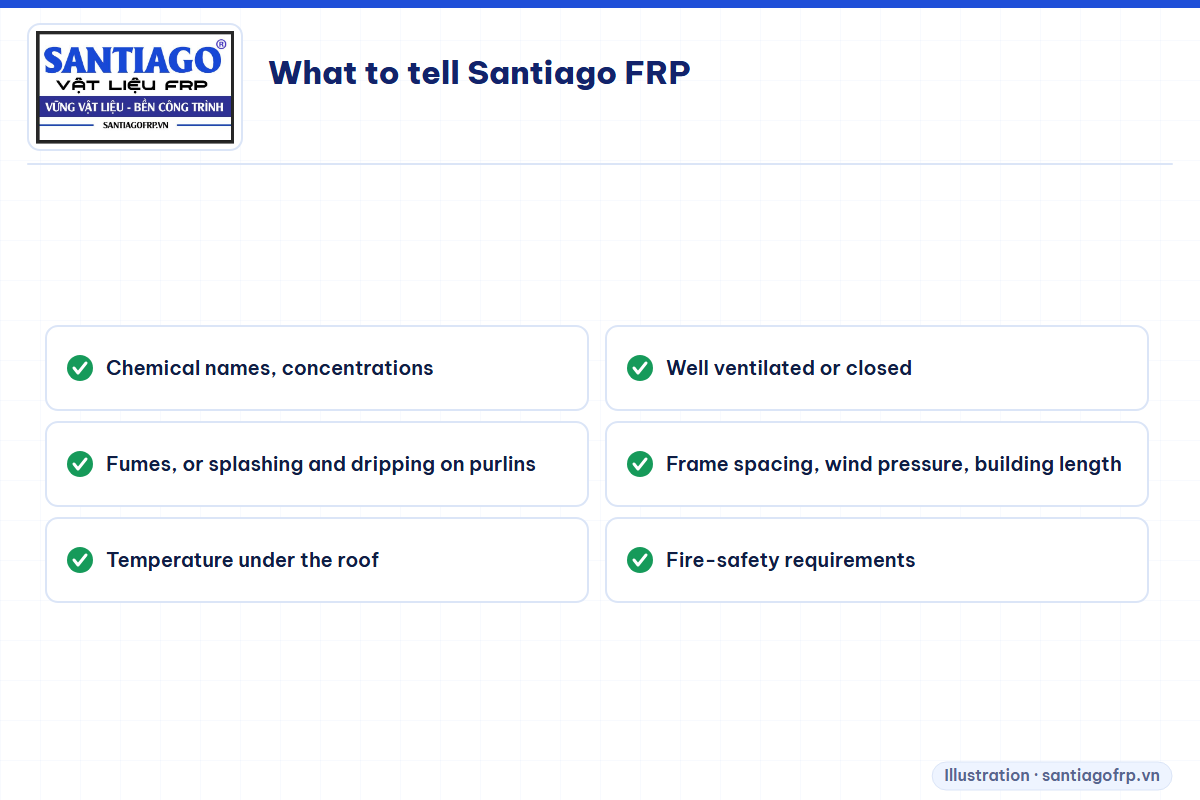
- The chemicals in the plant and their concentrations, if known.
- Whether they reach the roof as fumes or splash and drip directly onto the purlins.
- The temperature under the roof, especially near heated tanks and dryers.
- Whether the plant is well ventilated or closed.
- Frame spacing, design wind pressure, building length and planned roof sheets.
- Fire-safety requirements for the building.
Bolts, roof sheets and purlin sizes
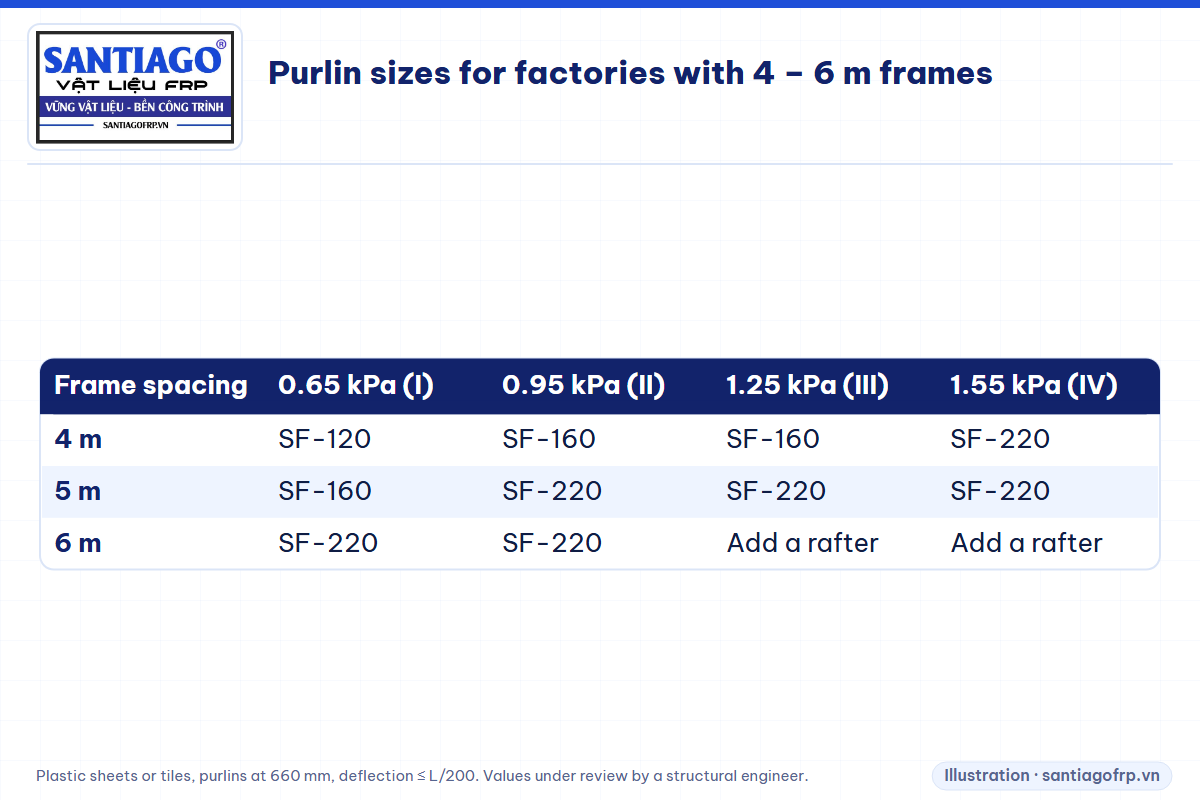
304 stainless bolts work under ordinary factory roofs; with chlorine or concentrated acid fumes even 304 can pit, so ask about the right bolt before ordering. Galvanised and zinc-aluminium sheets rust as fast as steel purlins under chemical fumes, so use plastic or FRP sheets. Factory frames are usually 5 – 6 m apart: 5 m frames need SF-160 at 0.65 kPa and SF-220 at 0.95 – 1.55 kPa; 6 m frames take SF-220 up to 0.95 kPa, beyond that add an intermediate rafter.
Platforms over tanks, trench covers and stairs also rust fast in steel: see FRP grating and FRP stairs.
References
- ISO 9223:2012, Corrosion of metals and alloys – Corrosivity of atmospheres – Classification, determination and estimation.
Frequently asked questions
Which purlins suit a plating shop roof?
FRP purlins in vinyl ester resin, because acid fumes rust steel purlins very quickly and anti-rust paint peels within a few years.
What is the difference between polyester and vinyl ester FRP purlins?
Polyester suits humidity, ammonia, salt water and dilute acids. Vinyl ester resists stronger acids and alkalis, chlorine fumes and higher temperatures.
Which chemicals can FRP not withstand?
Hydrofluoric acid attacks the glass fibre. Hot concentrated alkalis and strong organic solvents also need special advice and a special surface barrier.