
People new to FRP purlins ask how long they last if they never rust. The honest answer is that it depends on where and how they are used. FRP has no metal and does not rust, but it is a plastic with weaknesses different from steel. Knowing them in advance avoids problems.
UV light
UV in sunlight slowly breaks down the outer resin. FRP in direct sun for many years fades and becomes chalky, and eventually fibres show. This affects the surface; the load-bearing core is little affected. Three things slow it down: UV stabilisers in the resin, a surface veil and, if needed, a UV-resistant topcoat. Most of a roof purlin sits under the sheets; the exposed parts are the ends at the eaves and veranda purlins.

Temperature
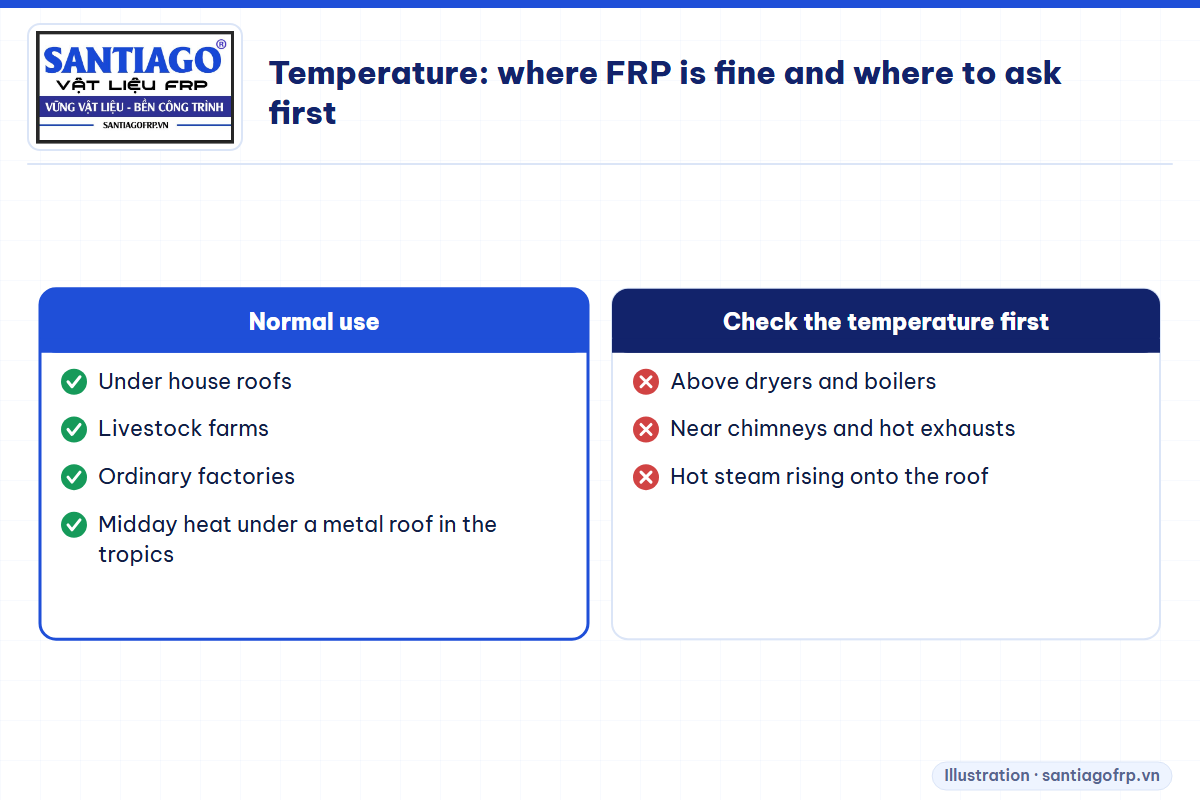
Resin softens as it warms, and each resin has a temperature above which stiffness drops clearly. For the polyester and vinyl ester used in pultrusion, that limit is well above the temperature under a metal roof at midday in tropical summer, so purlins in houses, farms and factories are normally fine. Take care near heat sources such as dryers, boilers, chimneys, hot exhausts or steam rising onto the roof; check the working temperature first.
Fire
FRP is a plastic and can burn, unlike steel. Steel does not burn but loses strength very fast when heated, so steel roofs also collapse in fires. Start from the fire requirements of the building: where they apply, use a fire-retardant resin and consult a fire-safety adviser. Ordinary houses, farms and verandas use the standard grade.
Long-term loads
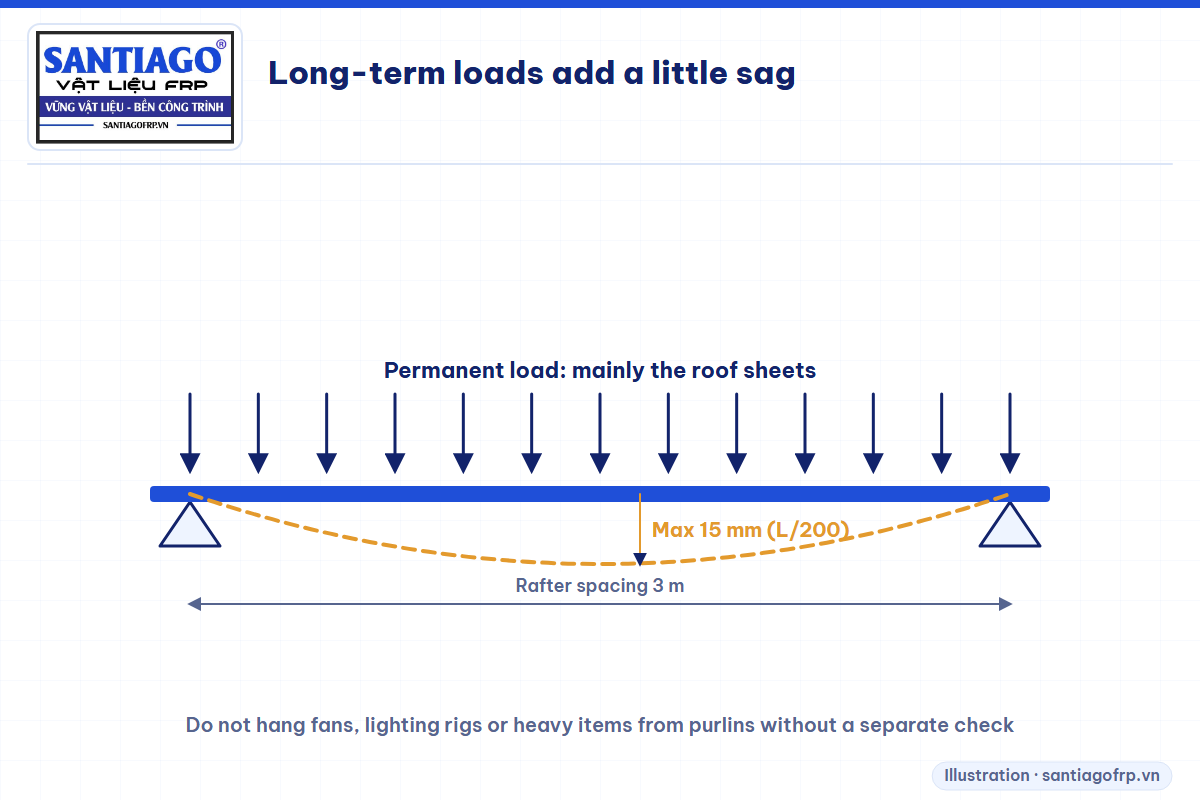
A load left on an FRP profile for months adds a little sag; this is creep, which timber also shows. Under plastic roof sheets or tiles the permanent load is small, so the effect is negligible. Santiago FRP span tables limit deflection to L/200, meaning a purlin over a 3 m rafter spacing sags no more than 15 mm. What really should be avoided is hanging heavy items such as industrial fans, lighting rigs or ceiling storage from purlins without a separate calculation.
Impact, water, chemicals and termites
FRP takes impact reasonably well and is not brittle like ceramics, but a hard hammer blow on an edge can chip the surface. Water, including sea water, does not rot FRP, and termites and fungi cannot eat resin or glass fibre. Most farm chemicals and domestic wastewater do not affect polyester; strong chemicals need vinyl ester, see chemical plant roofs.
Maintenance
- No anti-rust paint needed.
- Once a year, especially after storms, check bolts, screws and end caps.
- Purlin ends at the eaves and sun-exposed veranda purlins can get a UV topcoat when the surface fades.
- Chips or cracks in the surface: brush on resin or paint to cover the fibres.

Background: what FRP composite is.
Frequently asked questions
Do FRP purlins become brittle or rot in the sun?
They do not rot. After many years of direct sun the surface may fade and roughen from UV, but the load-bearing core is little affected, and most roof purlins sit under the sheets.
Can FRP purlins burn?
Yes. FRP is a plastic and can burn. Where fire rules apply, use a fire-retardant resin and consult a fire-safety adviser.
Do FRP purlins need maintenance?
No anti-rust painting is needed. Check bolts, screws and end caps once a year, especially after storms.